A new, gentle retelling of a classic tale.
An invitation to the palace
Once upon a time, a young woman dreamed of filling the corners of her village with flowers. She lived in a large house, but could hardly find a quiet corner where she could sit and draw.
A young woman was called Cinderella because she sat beside the hearth after working and got ashes on her dress. Her stepmother and two stepsisters left nearly all the chores to her. She had little time for her own plans, although she kept a box of drawings of gardens she hoped to create one day.
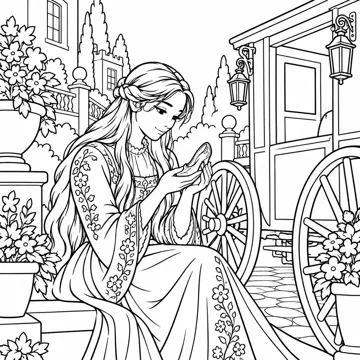
When an invitation to the palace ball arrived, the stepsisters asked her to help with their dresses. Cinderella wanted to go too. Her stepmother said she must finish an impossible list of jobs first. When their carriage departed, there were still dishes to wash. The young woman sat sadly on the courtyard step.
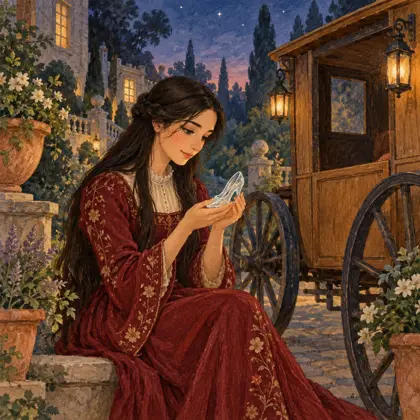
Her godmother found her there. She knew magic, and after listening she asked for a pumpkin from the garden. A wave of her wand turned it into a carriage. Some little mice became horses for a few hours, and Cinderella's worn dress changed into a burgundy gown. Glass slippers appeared on her feet.
Before midnight
'The magic ends at midnight,' her godmother warned. 'Be home before then.' Cinderella promised. At the palace nobody recognized her. At first she stood beside a window, looking at a poorly lit garden. The prince asked whether she disliked the music. 'I like it,' she said, 'but that path would be lovely with jasmine.'
They talked about gardens and then danced. Cinderella enjoyed herself so much that she lost track of time. When the clock began striking twelve, she remembered the warning and hurried away. She lost a slipper on the stairs. Rather than turn back, she reached the carriage just before it became a pumpkin again.
The next morning the prince wanted to find the young woman he had spoken with. He had only the glass slipper. He sent messengers to ask who had attended the ball and who could wear it. Many people tried, including the stepsisters, but none could walk comfortably in it.
A voice of her own
Cinderella asked for her turn. Her stepmother tried to stop her, but the messenger said every young woman could try. The slipper fitted. Then Cinderella brought its partner out of her drawing box. There could be no doubt. She put on a simple dress and accompanied the messenger to the palace.
The prince recognized her voice before looking at her shoes. He wanted to see her again, and Cinderella wanted to know him better too. She showed him her drawings and explained how she had been treated at home. She did not want to return to that life. At the palace she was offered a place to live and paid work with the head gardener.
The seasons passed. Cinderella learned to choose plants, the prince learned to listen to her, and they continued taking walks together. In time they decided to marry. The wedding took place in the garden she had helped design, among jasmine flowers and comfortable benches for guests who preferred talking to dancing.
Her godmother came without her wand. Nothing needed transforming. After the celebration, Cinderella kept the glass slippers as a memory and put on her gardening boots. Before bed she walked along the path one last time. Flowers were opening in the darkness, and they smelled exactly as she had imagined.
The end